
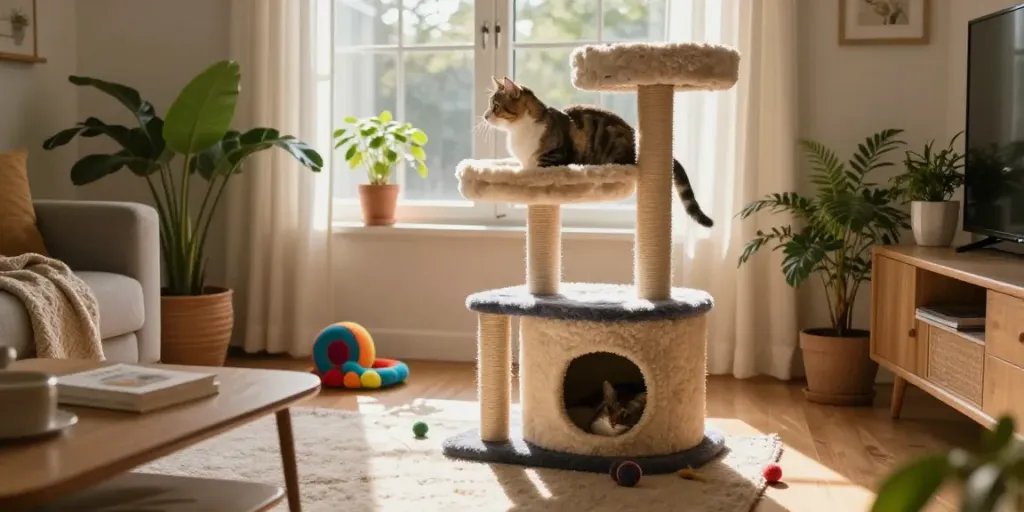
Understanding Cat Trees and Their Benefits
Cat trees are more than just furniture; they play a crucial role in your feline friend's happiness and well-being. Designed to mimic a cat's natural environment, these structures provide cats with the vertical space they crave, opportunities for play, and spots for resting. When exploring options, cat trees come in various styles and sizes, catering to all types of cats and homes.
What Are Cat Trees?
Cat trees, also known as cat towers or condos, are multi-level structures designed for cats to climb, scratch, play, and sleep. They often include various features such as scratching posts, platforms, tunnels, and sometimes even built-in toys. The primary purpose of a cat tree is to provide a designated space for cats to engage in play and exercise, which is essential for their physical and mental health.
Why Invest in Cat Trees?
Investing in a cat tree can significantly enhance your cat's quality of life. Here are some compelling reasons:
- Encourages Exercise: Cat trees promote climbing and jumping, encouraging physical activity which can help prevent obesity.
- Reduces Stress: Cats are naturally territorial and often feel stressed in confined spaces. A cat tree provides vertical territory, helping alleviate anxiety.
- Protects Furniture: By offering a suitable place to scratch and play, cat trees can prevent cats from damaging your furniture.
- Enhances Play: Many cat trees come with attached toys or interactive elements that stimulate mental engagement.
Key Features to Look For
When selecting a cat tree, consider the following features:
- Stability: Ensure the cat tree is sturdy enough to support the weight of your cat, especially if you have larger breeds.
- Material: Look for durable materials that can withstand scratching and climbing. Wood frames and sisal-covered posts are ideal.
- Design: Choose a design that fits your home decor while also meeting your cat's needs for play and rest.
- Size: Consider your available space and the height preferences of your cat, as some cats love to perch high.
Choosing the Right Cat Tree for Your Feline Friend
Size Considerations for Your Home
The first step in selecting a cat tree is to consider the size of your living space. Measure the area where you intend to place the cat tree, ensuring there’s enough room for the structure without obstructing pathways. It's also essential to assess the height of your ceilings if you're opting for a tall tree. Cats love to climb, and taller structures can provide them with a sense of security and an excellent view of their territory.
Material Quality and Safety
Safety should be a top priority when selecting a cat tree. Choose products made from non-toxic materials, particularly if your cat tends to chew on things. Solid wood frames and natural fabrics are safe choices. Ensure that any materials used are sturdy enough to withstand the wear and tear of enthusiastic play. Additionally, check for any sharp edges or easily removable small parts that could pose a choking hazard.
Styles That Fit Your Decor
Cat trees come in a variety of styles, from modern to traditional. Consider a design that complements your home decor. There are minimalist options crafted from sleek materials, as well as more decorative ones that resemble trees or castles. Finding a style that matches your taste can enhance the aesthetics of your living space while providing your cat with a dedicated area.
Maintenance and Care for Cat Trees
Cleaning and Upkeep Tips
Regular maintenance of your cat tree will not only prolong its lifespan but also keep it hygienic for your pet. Vacuum the surfaces to remove loose fur and debris, and wipe down the structure with pet-safe cleaners. Check for any damaged areas, such as frayed scratching posts or loose screws, and address them promptly to ensure the stability and safety of the cat tree.
Extending the Lifespan of Your Cat Tree
To make your cat tree last longer, place it in a low-traffic area where it won't be knocked over. Regularly rotate the tree to ensure even wear, and periodically check the integrity of the materials. If your cat tends to scratch specific areas more than others, consider placing additional scratch pads on those sides to divert their attention.
Repairing Common Wear and Tear
Some wear and tear on a cat tree is inevitable, but minor repairs can be made at home. For example, if the fabric is worn, you can reupholster it with new material. If the scratching posts are frayed, they can often be replaced or rewrapped with sisal rope. Keeping a small toolbox handy for quick repairs will help you maintain the cat tree in good condition.
Integrating Cat Trees into Your Home Environment
Strategic Placement for Cat Engagement
Where you place your cat tree can influence how much your cat uses it. Position it near windows to provide your cat with entertainment from outside activity, or in a quiet corner where they can retreat and feel safe. Avoid placing the tree in areas with excessive foot traffic, as this may deter your cat from using it.
Creating a Cat-Friendly Space
A cat-friendly environment goes beyond just a cat tree; it's about creating a space where your cat feels safe and loved. Incorporating other elements such as soft blankets, toys, and hiding spots can enhance your cat's enjoyment of the space. Consider providing climbing shelves or small perches around the room to encourage exploration and play.
Maximising Fun with Additional Accessories
Enhance your cat tree experience by adding accessories such as dangling toys, interactive feeders, or even a cosy blanket for extra comfort. Toys that stimulate your cat's hunting instincts can be hung from the cat tree itself, encouraging play. Regularly switch out toys to keep the environment fresh and engaging for your cat.
Future Trends in Cat Trees for 2026 and Beyond
Innovative Designs on the Horizon
As pet furniture evolves, we can expect to see more innovative designs that not only cater to feline functionality but also integrate seamlessly into modern home decor. Look out for cat trees that resemble contemporary furniture styles, offering a blend of practicality and aesthetics.
Smart Technology Integration
The future may see the incorporation of smart technology into cat trees, such as built-in monitoring systems that track your cat’s activity, or automated features that entertain your cat while you're away. These advancements can enhance the interaction between the pet and the owner, providing insights into the cat’s behaviour and health.
Eco-Friendly Materials and Sustainability
With an increasing focus on sustainability, future cat trees are likely to be crafted from eco-friendly materials. Look for brands that use recycled or sustainably sourced materials. These products will not only benefit your cat but also reduce your carbon footprint, aligning with a more environmentally conscious lifestyle.
What are the best brands of cat trees?
While many brands offer quality cat trees, some of the most trusted names in the market include Frisco, Vesper, and PetFusion. Each brand has its unique selling points, with Frisco known for affordability, Vesper for stylish designs, and PetFusion for durability. Researching each brand can help you find a cat tree that best fits your needs and budget.
Are cat trees good for cats?
Yes, cat trees are highly beneficial for cats. They provide essential physical exercise, mental stimulation, and a safe space for relaxation and observation. All these benefits contribute to a happy and healthy feline.
What can I use instead of a cat tree?
If a cat tree isn't an option, there are alternative solutions like wall-mounted shelves, scratching posts, or even DIY solutions like a tall bookshelf designed for climbing. These alternatives can provide similar engagement and enrichment for your cat while fitting your home’s layout.